What Type of Cable Ties Should I Use?
Choosing cable ties is not as simple as matching a strap to a bundle. A tie that works behind a desk may fail outdoors, near heat, or around vibrating machinery. The right choice depends on the cable bundle, its environment, and whether it may need future adjustment.
Maurus C. Logan, the engineer credited with developing the Ty-Rap cable tie, is associated with a useful selection principle: “Match the tie to the conditions, not just the bundle.” This is an editorial summary, not a verified quotation. It captures what careful cable management requires. Nylon ties suit many indoor jobs, while UV-resistant versions better tolerate sunlight. For high temperatures or demanding industrial settings, material and rating matter. Need to reopen the bundle? Consider releasable ties. For demanding outdoor or corrosive environments, stainless-steel options may be appropriate.
Small details count. Check the bundle diameter, temperature range, exposure to chemicals, and required holding strength. A tie pulled too tight can damage insulation; one chosen too weakly can loosen under vibration. There is no universal best option. This guide compares common cable ties by material, design, and application, then explains how to choose a suitable type without overlooking installation or maintenance needs. When the conditions are unclear, verify the manufacturer’s specifications rather than guessing.
Cable Tie Basics: Design, Components, and Common Uses
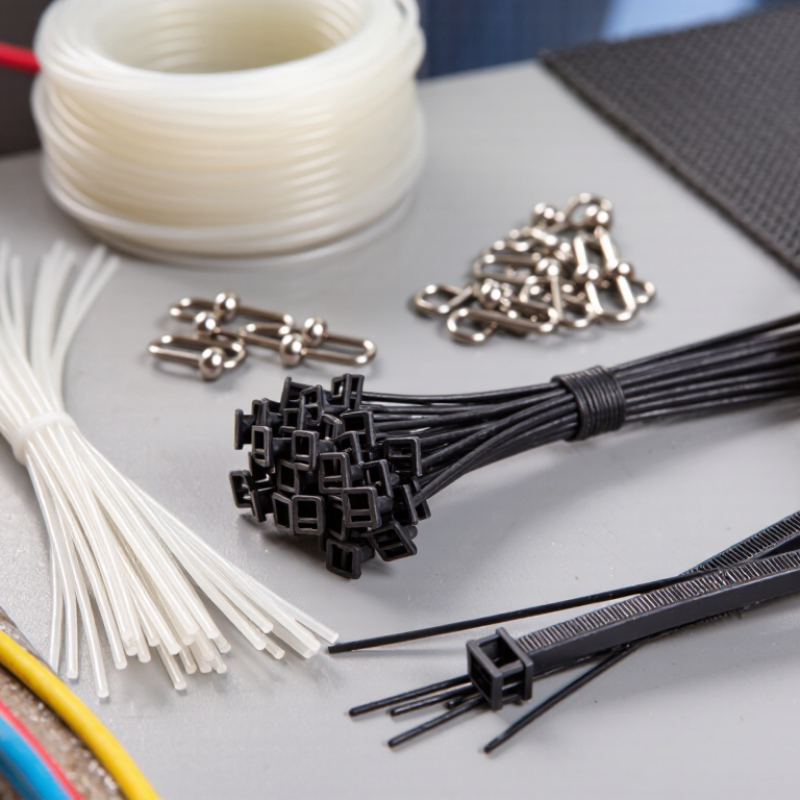
A cable tie is a small fastening system: a flexible strap passes through a locking head, where a pawl grips the strap’s teeth. The strap carries tension; the head holds the loop closed. Some ties have a releasable latch, while standard versions are cut off after use. Material matters. Nylon ties suit many indoor bundles, while outdoor exposure may call for UV-resistant material. Check the stated temperature range, tensile rating, and environmental limits rather than judging by color or thickness alone. Small details matter. A tie that is too short can strain its head; one pulled too tight can crush insulation or pinch a soft hose.
Cable ties organize wiring behind desks, inside equipment cabinets, and along vehicle or building routes. For delicate cables, choose a wide strap and leave room for movement; don’t cinch the bundle into a hard, flat shape.
NFPA’s Home Electrical Fires report estimates 46,700 U.S. home fires involving electrical failure or malfunction each year, on average, from 2015 to 2019. Those figures cover many causes and do not identify cable ties as a cause.
They do support careful installation: keep bundles away from heat sources, avoid damaged insulation, and use ties only for restraint—not as electrical protection. One judgment call remains: even a tidy bundle may hide excess tension, so inspect the cable beneath the tie.
Key Factors for Choosing the Right Cable Tie
What Type of Cable Ties Should I Use?
Key Factors for Choosing the Right Cable Tie
Choosing a cable tie starts with the job, not the bundle’s appearance. Check the bundle diameter, expected load, temperature, moisture, and sunlight exposure. A narrow tie may hold light cables neatly but can fail under steady tension. IEC 62275 qualification data express loop tensile strength in newtons, with ratings ranging from tens of newtons to above 1,000 N. Compare the tested rating with the actual application, and allow a safety margin. A rating is not a working-load guarantee.
Material matters. Nylon ties suit many indoor applications, while UV-stabilized versions are better for outdoor exposure. Stainless steel ties can withstand harsher heat and weather, but may be excessive for ordinary cable management. Nylon also responds to moisture: ISO 62 provides a standardized method for measuring water absorption in plastics. In damp locations, check the tie’s material specification and environmental rating rather than assuming all nylon performs alike.
Fit matters too. Leave room for cables to move, and avoid tightening until insulation dents or deforms. Sharp edges can cut into a tie; use a protective liner or a smoother routing path. Small details count. For critical installations, consult the product’s test documentation and applicable electrical guidance. I would still inspect a sample bundle after installation; real routing often reveals pressure points that a spec sheet misses.
Cable Tie Materials and Their Environmental Suitability
What Type of Cable Ties Should I Use?
Cable ties can look identical in a box, but their materials behave differently outdoors. Standard nylon works well for dry, indoor wiring bundles. It is flexible and easy to handle. Yet nylon absorbs moisture, which can affect its strength and fit. For exposed installations, UV-stabilized nylon resists sunlight better. It does not make the tie immune to years of heat and weather. Check the rated temperature and service conditions, not just the material name.
Wet areas call for closer attention. Polypropylene resists moisture and some chemicals, but it may not suit every load or temperature. For hot, corrosive, or demanding outdoor settings, stainless steel ties may be appropriate. The exact grade matters, especially near salt spray or cleaning chemicals. Metal edges can also damage insulation if a tie is overtightened. Leave the bundle secure, not crushed.
Match the tie to the environment around the cable: direct sun, standing water, oil, heat, or frequent vibration. Read the manufacturer’s technical data for temperature limits and chemical compatibility. A small test bundle can reveal problems before a full installation. This choice is less tidy than a material chart suggests; real sites rarely stay clean or dry. When conditions are uncertain, record them and verify the selected tie’s ratings before installation.
What Type of Cable Tie Should I Use?
Typical temperature ranges can help narrow down cable-tie materials for different environments.
These indicative material-level ranges are not product ratings; actual limits depend on the grade, tie design, and exposure conditions. Nylon 6/6 suits many general-purpose applications, while UV-stabilized grades are preferable for prolonged sunlight. Polypropylene can suit moist or chemically exposed environments, and ETFE or PVDF may be considered for higher-temperature or demanding chemical exposure. Always check the cable-tie manufacturer’s datasheet for the specific application.
Types of Cable Ties for Different Applications
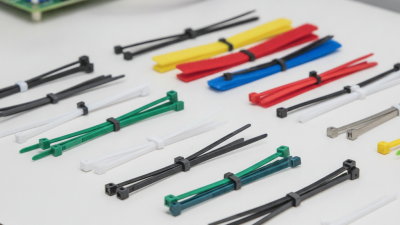
Cable ties differ in material, locking style, and mounting method, so the work environment matters as much as bundle size. For indoor wiring, standard nylon ties suit dry, moderate-temperature spaces. Choose a length that closes securely without leaving a long, sharp tail. Snug is enough.
Outdoor runs need UV-resistant ties, since sunlight can make ordinary nylon brittle over time. Check the product’s temperature range too; a sunlit roof or engine compartment may become much hotter than the surrounding air. Stainless steel ties are useful around heat, moisture, or demanding industrial conditions. Match the steel grade to the exposure, especially where salt or chemicals are present. They are durable, but less forgiving to install.
For cables that need regular access, releasable ties can be opened and reused. They work well in test benches and temporary equipment layouts, though repeated handling can wear the latch. Push-mount ties suit panels with prepared holes, while ties with identification areas help technicians trace crowded wiring. Small details matter. Leave room for cables to move, and avoid cinching ties so tightly that they flatten insulation. There is no perfect tie for every job; checking the environment and cable bundle first prevents many avoidable failures.
Matching Tie Size and Strength to Your Requirements
A cable tie should fit the bundle and carry its load without being pulled near its limit. Measure the bundle at its widest point, then allow enough length for the head to close cleanly. For a 25 mm round bundle, the circumference is about 79 mm; that is only a starting point, since the tie head and closure need extra length. A snug fit matters. Avoid crushing insulation or leaving a loose loop that can shift under vibration.
Compare the rated loop tensile strength, not just the tie’s width. IEC 62275:2018 sets test and performance requirements for cable ties, including mechanical strength and environmental conditioning. Use the rating shown on a technical datasheet, then consider bundle weight, sharp edges, temperature, UV exposure, and movement. A rating is not automatically a safe working load. For a heavy or moving bundle, leave a generous margin and test a sample under realistic conditions. This can feel overly cautious, but a tie that holds on a bench may creep in service. Recheck the sizing choice if the bundle changes.