What Are the 2026 Top Wire Management Types for Global Buyers?

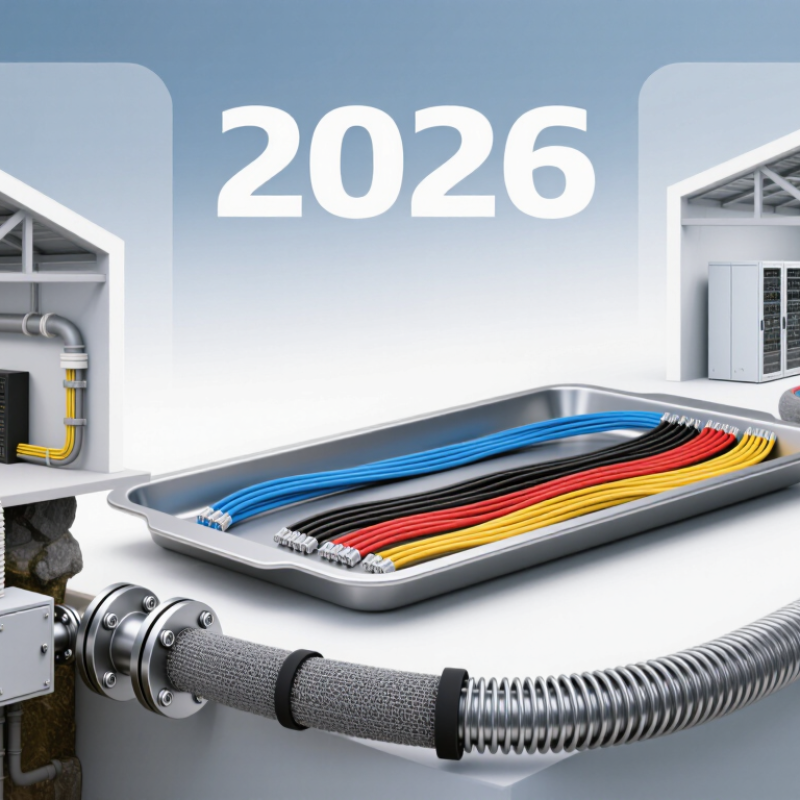
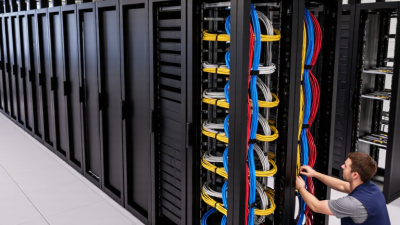
In 2026, global buyers will evaluate wire management as a complete infrastructure decision, not a simple accessory purchase. Factories, data centers, offices, and renewable energy sites face different routing pressures. A compact control cabinet may need adhesive clips and braided sleeves. A large warehouse may require cable trays, conduits, or overhead raceways. Outdoor installations demand stronger protection against moisture, ultraviolet exposure, dust, and temperature changes.

The leading types will include cable trays, flexible conduits, cable glands, wiring ducts, cable clips, spiral wraps, and modular sleeves. Each option solves a different problem. Cable trays support high-volume routing and simplify inspection. Conduits protect wires from impact and contamination. Glands improve entry points, especially where vibration or water may create failures. Simple clips remain useful. They are inexpensive and fast to install. However, low-cost parts can become expensive when they loosen, crack, or complicate maintenance.

Experienced buyers should compare material quality, load capacity, flame performance, installation speed, and replacement access. Supplier documentation matters. So do sample tests under realistic conditions. A product that performs well in a clean office may fail near oil mist or constant vibration. That assumption can fail.

Global procurement teams must also check regional standards, connector compatibility, packaging, lead times, and after-sales support. Sustainability is becoming more important, but recycled content alone does not prove durability. Sometimes, the greener choice is the product that lasts longer. This article examines the 2026 top wire management types and the practical trade-offs behind each selection. No single system wins every site.

What Are the 2026 Top Wire Management Types for Global Buyers?

What Is Wire Management and Why Does It Matter in 2026?

Wire management is the planned routing, securing, labeling, and protection of electrical and data cables. It includes trays, conduits, cable glands, clips, sleeves, and separation systems. In 2026, this work matters because modern facilities carry more power and data through tighter spaces. The International Energy Agency’s Electricity 2024 report estimates that data center electricity use could exceed 1,000 TWh globally by 2026. Poor routing can restrict airflow, increase service time, and make faults harder to locate.

The practical goal is not simply a neat cabinet. Heat is unforgiving. Cable trays support heavier runs, while conduits protect cables from dust, impact, and moisture. Flexible conduits help around moving equipment. Braided sleeves organize smaller bundles and reduce abrasion. Clear labels also matter when technicians must trace one cable among hundreds. Grand View Research reported strong expansion in the global cable management market, driven by data centers, infrastructure upgrades, and industrial automation. That growth reflects a basic need: systems must remain accessible after installation.

From field experience, over-tightened ties are a common weakness. They can deform insulation and complicate future maintenance. A cleaner design leaves service loops, separates power from sensitive signal cables, and respects bend-radius guidance. Still, no single wire management type fits every site. Temperature, vibration, fire requirements, cleaning routines, and local electrical rules can change the decision. A visually perfect installation may perform poorly. That is the part buyers should question.

What Are the 2026 Top Wire Management Types for Global Buyers?

What Is Wire Management and Why Does It Matter in 2026?

Wire management includes products that route, bundle, protect, and organize electrical cables. The chart compares representative maximum continuous temperature ratings for widely used wire management types. Higher-temperature solutions are generally selected for heat-exposed industrial, transportation, energy, and infrastructure installations. Actual performance depends on material, construction, certification, installation method, and the supplier’s product specification.

Reference basis: typical published ratings for common material families and construction types, including PVC, HDPE, nylon, PET, stainless steel, and liquid-tight flexible conduit. Ratings are representative ranges rather than universal limits.

Which Wire Management Types Are Most Used by Global Buyers?

Global buyers most often choose wire management types according to installation speed, environment, and maintenance needs. Cable ties remain widely used for bundling control wires, appliance cables, and temporary routing. They are inexpensive and quick to install. However, standard nylon ties can become brittle under ultraviolet exposure or extreme heat.

Hook-and-loop straps are increasingly popular in data rooms, office fit-outs, and control cabinets. Technicians can open them repeatedly without cutting the bundle. Cable clips and adhesive mounts suit light-duty routing along panels, desks, and machinery frames. Their small footprint keeps wires away from moving parts. Adhesive performance can decline on dusty or oily surfaces. That detail is easy to overlook.

For industrial and outdoor projects, buyers often specify cable glands, conduits, and cable trays. Glands help seal cable entry points against moisture and dust. Conduits provide stronger mechanical protection near floors, walls, and production equipment. Cable trays manage larger groups across ceilings and service corridors. Spiral wrap and braided sleeving remain useful where cables need flexibility and abrasion resistance.

Experienced procurement teams usually compare material, temperature range, load capacity, bend radius, and installation time. They also check documentation for relevant electrical and safety requirements. In real projects, the cheapest option is not always the most reliable. A tray may reduce future maintenance, while a simple clip may fit a small installation better. The choice still deserves review after testing.

How Do Cable Trays, Raceways, and Conduits Compare?

Global buyers are prioritizing cable trays, raceways, and conduits as data centers and factories expand. The International Energy Agency’s Electricity 2024 report estimates that data center electricity demand could exceed 1,000 TWh by 2026. More power means denser, warmer cable routes.

Cable trays suit open industrial spaces. Ladder trays improve ventilation and support heavy power cables. Perforated trays offer better containment for mixed installations.

Raceways provide cleaner routing in offices, retail areas, and finished interiors. They protect cables from impact while preserving access for maintenance.

Conduits offer the strongest physical protection, especially outdoors, underground, or near machinery. However, rigid conduit can slow future changes. That trade-off is often underestimated.

MarketsandMarkets has projected steady growth in the global cable management market through 2028, driven by construction, telecommunications, and industrial automation. Its research highlights rising demand for organized, scalable routing systems. In practical projects, experienced installers usually combine all three types. A tray may carry main power lines, a raceway may serve workstations, and conduit may cross a wet or exposed area. This hybrid approach follows application needs rather than product fashion. IEC 61537 remains a key reference for cable tray systems, but local installation rules still require verification. One detail is easy to miss: fill capacity, heat dissipation, grounding, and access space must be reviewed together. Cost comparisons alone can mislead. I have seen “cheaper” routes create expensive maintenance later. Forecasts also depend on construction cycles, so buyers should avoid treating market numbers as certainty.

What Factors Should Buyers Consider When Selecting Wire Management?

What Are the 2026 Top Wire Management Types for Global Buyers?

Global buyers in 2026 will compare more than trays, conduits, clips, and cable glands. They will examine safety, installation speed, maintenance access, and environmental performance. Grand View Research estimates that the global cable management market will grow at about 8.7% annually from 2024 to 2030. This growth reflects expanding data centers, industrial automation, renewable energy systems, and commercial construction.

The selection process should begin with the installation environment. Outdoor projects may need UV-resistant conduits and sealed glands. High-temperature areas require materials that resist heat and aging. Data rooms need organized pathways, bend control, airflow protection, and low electromagnetic interference. Cable trays suit large cable volumes and frequent changes. Flexible conduits protect moving connections. Clips and wraps work well for lighter, accessible bundles. Buyers should also check load ratings, flame performance, corrosion resistance, and regional certification requirements. A cheaper product can create higher labor costs later. This is easy to underestimate.

Tips: Ask suppliers for test reports, material details, and installation guidance. Measure cable weight, bend radius, and expansion space before ordering. Consider tool-free systems where maintenance is frequent. Keep spare capacity near panels and equipment. MarketsandMarkets reports continued demand for scalable cable management in industrial and infrastructure applications, but market forecasts are not project specifications. Conditions vary. Even experienced teams can overlook heat, dust, or future cable growth. A small pilot installation can expose these weaknesses before full deployment.

How Can Global Buyers Evaluate Quality, Compliance, and Total Cost?

Global buyers in 2026 will compare more than appearance when selecting wire management products. Common options include braided sleeving, spiral wrap, cable clips, protective conduits, and cable glands. Each type suits a different working environment. Braided sleeving supports flexible cable bundles, while conduits provide stronger protection against abrasion, dust, and movement. Clips work well inside panels, but weak plastic can crack during installation.

Quality evaluation should begin with material records, dimensional checks, and sample testing. Ask for tensile strength, temperature range, flame behavior, and aging data. Inspect samples for uneven braiding, sharp edges, loose locks, or inconsistent wall thickness. Small defects matter. A sleeve that frays near a connector can delay assembly and create repeated labor costs. I have found that supplier photos often hide these details.

Compliance needs written evidence, not vague promises. Request relevant test reports, material declarations, traceability information, and packaging labels for each shipment. Requirements differ by destination and application, so buyers should verify local rules with qualified specialists. Total cost includes tooling, freight, installation time, replacement rates, and disposal. A cheaper clip may require extra labor or fail under vibration. Calculate cost per installed meter, not only unit price. Still, even a detailed spreadsheet can miss field conditions, especially humidity, heat, and rushed installation. Small pilot orders reveal more than polished presentations.

What Are the 2026 Top Wire Management Types for Global Buyers? — How Can Global Buyers Evaluate Quality, Compliance, and Total Cost?

Wire Management Type Typical Materials Best-Fit Applications Key Quality Indicators Typical Operating Range Relevant Compliance Considerations Indicative Unit Cost
(USD)
Installation & Maintenance Total-Cost Profile Buyer Evaluation Priority
Braided Cable Sleeve Polyester PET, flame-retardant PET, expandable monofilament braid Control cabinets, automotive harnesses, industrial equipment, server and audiovisual cabling Expansion ratio, braid coverage, abrasion resistance, edge fraying, closure quality, cut length consistency Common PET versions: approximately -50°C to +150°C, subject to construction and certification Request applicable flammability evidence, RoHS and REACH declarations, and automotive or industrial qualification where required $0.20–$4.00 per meter Fast installation; can be cut to length; maintenance is easy if the sleeve includes a split or hook-and-loop opening Low purchase cost and low labor cost; replacement may be needed in severe abrasion or heat conditions Verify braid density, recovery after expansion, flame behavior, and compatibility with connectors
Corrugated Split Loom Tubing Polypropylene, polyethylene, flame-retardant polymer blends Automotive wiring, machinery, appliance harnesses, and general cable bundling Split retention, flex-fatigue resistance, impact strength, inner-surface smoothness, dimensional stability Often approximately -40°C to +125°C; higher-temperature grades require separate confirmation Check material declarations, flammability rating, vehicle or machinery requirements, and UV suitability for outdoor use $0.15–$2.50 per meter Simple push-in installation; fittings and clamps may be required; split can open under vibration if retention is weak Very economical for high-volume harness protection; labor increases when many branch exits are required Test split closure, bending radius, crush recovery, and resistance to oil, chemicals, and road debris
Heat-Shrink Tubing Polyolefin, fluoropolymer, elastomer, adhesive-lined multilayer materials Insulation, strain relief, splice protection, terminal sealing, and environmental protection Shrink ratio, recovery temperature, wall thickness after shrinking, concentricity, dielectric strength, sealing performance Standard polyolefin grades commonly operate around -55°C to +135°C; specialized materials can operate at higher temperatures Verify voltage rating, flammability, RoHS and REACH status, chemical compatibility, and relevant electrical standards $0.10–$8.00 per meter Requires controlled heating and correct tooling; rework is more difficult after shrinking Moderate material cost but potentially higher labor and rework cost; adhesive-lined versions reduce moisture-related failures Confirm shrink ratio, recovery force, wall thickness, heating method, and long-term sealing performance
Spiral Cable Wrap Polyethylene, nylon, polyurethane, or flexible polymer compounds Desk systems, robots, control panels, temporary installations, and cable groups requiring branch exits Pitch uniformity, flexibility, tensile strength, branch-exit retention, memory, and resistance to repeated bending Common polymer versions: approximately -40°C to +85°C or higher, depending on material Check flame rating, UV resistance, chemical resistance, and suitability for moving applications $0.30–$3.50 per meter Very fast to install and easy to remove; may loosen when exposed to continuous vibration or high torsion Low initial cost and low maintenance cost for static cable groups; less suitable for demanding continuous-motion cycles Evaluate pitch, compression on cables, bend performance, and retention after repeated movement
Hook-and-Loop Cable Management Nylon or polyester hook-and-loop tape, sewn or molded closures Data centers, office systems, test equipment, broadcast systems, and frequently reconfigured racks Cycle life, closure strength, tape width, edge quality, dust resistance, and cable pressure Many textile versions operate approximately from -20°C to +85°C; exact limits depend on backing and adhesive Confirm low-smoke or flame requirements where applicable; adhesive-backed versions need surface and temperature validation $0.10–$2.00 per piece Excellent serviceability and tool-free access; periodic inspection may be needed in dusty or high-vibration environments Low total cost when frequent access or rearrangement is expected; reduces technician labor during maintenance Prioritize release-cycle durability, non-abrasive contact surfaces, load capacity, and reusable closure performance
Cable Glands Nylon, nickel-plated brass, stainless steel, elastomer seals, locking nuts Enclosures, outdoor equipment, control panels, industrial automation, and hazardous-area designs when certified Strain relief, sealing compression, thread accuracy, clamping range, pull-out resistance, and ingress protection Common ranges are approximately -40°C to +100°C; material and seal selection can extend the range Validate IP rating, thread standard, EMC requirement, electrical safety rules, UV resistance, and hazardous-location certification where applicable $0.30–$15.00 per piece Moderate installation effort; correct torque and cable diameter are critical; seals may require replacement during service Higher unit cost but protects the enclosure and reduces moisture, dust, and strain-related failures Match thread, cable range, seal material, IP target, torque specification, and enclosure wall thickness
Cable Trunking and Wiring Duct Rigid PVC, halogen-free polycarbonate, ABS, aluminum, or steel Electrical cabinets, machine control panels, building services, and structured industrial wiring Wall thickness, cover retention, slot geometry, impact strength, heat resistance, and cut-edge quality PVC types often suit moderate temperatures; halogen-free and metal versions support broader application conditions Check electrical enclosure requirements, flame behavior, halogen content, smoke performance, and regional material restrictions $3–$35 per meter Requires measuring, cutting, fastening, and cover removal; provides orderly routing and straightforward future access Medium initial cost with strong labor savings in large cabinets and high-density installations Assess fill ratio, bend accessories, cover retention, finger safety, heat dissipation, and mounting method
Cable Tray and Ladder Tray Galvanized steel, stainless steel, aluminum, or reinforced polymer Industrial plants, commercial buildings, energy facilities, data centers, and long cable runs Load rating, span capacity, corrosion protection, grounding continuity, deflection, fittings, and seismic performance Determined by material, coating, installation environment, and cable temperature; outdoor designs need weather validation Review local electrical codes, fire-stopping rules, bonding and grounding requirements, corrosion class, and seismic provisions $15–$180 per meter Higher installation effort; needs supports, fittings, bonding, and periodic inspection of fasteners and corrosion High initial cost but efficient for large cable volumes and long service life; installation design strongly affects total cost Calculate cable load, support spacing, thermal clearance, corrosion exposure, expansion joints, and future capacity
Energy Chain / Cable Carrier Engineering polymer, reinforced polymer, steel, aluminum, or hybrid construction Machine tools, robotics, packaging equipment, linear axes, and continuous-motion applications Dynamic bend radius, travel length, cycle life, noise, torsional resistance, cable separation, and unsupported length Common polymer systems operate approximately from -40°C to +100°C; specialized designs support wider ranges Confirm machine safety, flame behavior, ESD needs, cleanroom suitability, and compatibility with drag-chain-rated cables $10–$250 per meter Requires correct cable layout, separation, bend radius, and end mounting; incorrect loading can cause early cable failure Higher purchase and design cost, but often lowers downtime in repetitive-motion equipment Use rated cycle data, not only static temperature data; verify travel speed, acceleration, radius, fill ratio, and noise
EMI/RFI Shielding Sleeve Tinned copper, copper alloy, stainless steel, conductive textile, or metallized fiber Industrial controls, telecommunications, medical equipment, instrumentation, and high-noise electrical environments Shielding effectiveness, coverage, transfer impedance, grounding method, flexibility, and termination integrity Depends strongly on metal, textile, insulation, and termination system; confirm full assembly limits Evaluate EMC requirements, electrical bonding, grounding continuity, RoHS and REACH declarations, and applicable regional EMC rules $1–$25 per meter Installation is moderate; poor termination can negate shielding performance; inspection should include continuity and bonding Higher material cost, justified where electromagnetic interference can cause malfunction, testing failures, or downtime Request frequency-based test data, attenuation method, termination instructions, and corrosion compatibility
Cable Clips, Saddles, and P-Clamps Nylon, polypropylene, stainless steel, coated steel, or elastomer-lined metal Panel wiring, vehicle harnesses, machinery, wall routing, and vibration-prone installations Retention force, clamp pressure, edge smoothness, screw-hole accuracy, vibration resistance, and material aging Common plastic versions suit moderate temperatures; metal and high-temperature polymers support more demanding conditions Check flammability, UV resistance, corrosion protection, material declarations, and electrical clearance requirements $0.05–$3.00 per piece Quick installation; correct spacing and fastener torque are essential; over-tightening can damage insulation Very low unit cost, but poor selection can create cable abrasion, rework, and intermittent faults Verify cable diameter range, minimum bend radius, pull-out force, vibration performance, and contact pressure
Cable Entry Frames and Modular Sealing Systems Elastomer sealing blocks, coated steel frames, stainless steel frames, polymer inserts High-density cabinet entries, outdoor enclosures, control rooms, and applications requiring modular cable changes Sealing compression, cable retention, modularity, fire performance, water-tightness, and installation repeatability Often approximately -40°C to +100°C; confirm seal compound and frame material limits Validate IP rating, fire-stop or smoke requirements, EMC options, chemical resistance, and enclosure certification $20–$300 per assembly Higher planning and installation effort; enables cable additions without replacing the complete entry plate Higher initial cost but can reduce future modification cost and enclosure downtime Assess current and future cable capacity, sealing range, fire requirements, spare-module strategy, and service access

Note: Cost ranges are indicative 2026 planning estimates in USD for common industrial purchasing quantities. Actual prices vary with material grade, dimensions, certifications, order volume, tooling, freight, tariffs, installation labor, and region. Operating temperatures and compliance requirements must be verified against the supplier’s current technical datasheet and the complete installed assembly.

x