Choosing the right RCA cables can feel surprisingly difficult. Global buyers face crowded catalogs, unclear specifications, and dramatic claims about sound quality. A cable may look premium, yet perform poorly in a noisy installation. Another may appear ordinary, but deliver stable signal transfer for years.
Brent Butterworth, a veteran audio reviewer and measurement-focused specialist, has expressed a useful principle: “Cables should be judged by measurable performance and listening context, not marketing claims.” That idea should guide this comparison. Buyers need to examine conductor quality, shielding structure, connector strength, cable length, impedance concerns, and manufacturing consistency. These details matter when connecting turntables, amplifiers, mixers, televisions, or professional audio equipment.
This Top 10 list focuses on practical purchasing decisions. It considers signal clarity, hum resistance, flexibility, plug fit, durability, and value across different markets. Some models suit short home connections. Others perform better beside power adapters, computers, or stage equipment. The most expensive option is not automatically the best choice. Not even close.
Testing RCA cables in real systems also reveals uncomfortable limits. Room noise, weak equipment, and poor grounding can overshadow small cable differences. I have seen attractive cables fail because their plugs loosened after repeated use. That detail is easy to miss. Specifications can also be incomplete, especially across international suppliers.
This guide is therefore not a promise of universal perfection. It is a structured starting point for informed buyers. Check compatibility, verify supplier testing, and inspect return policies before ordering. A sensible choice usually beats an impressive-looking one.
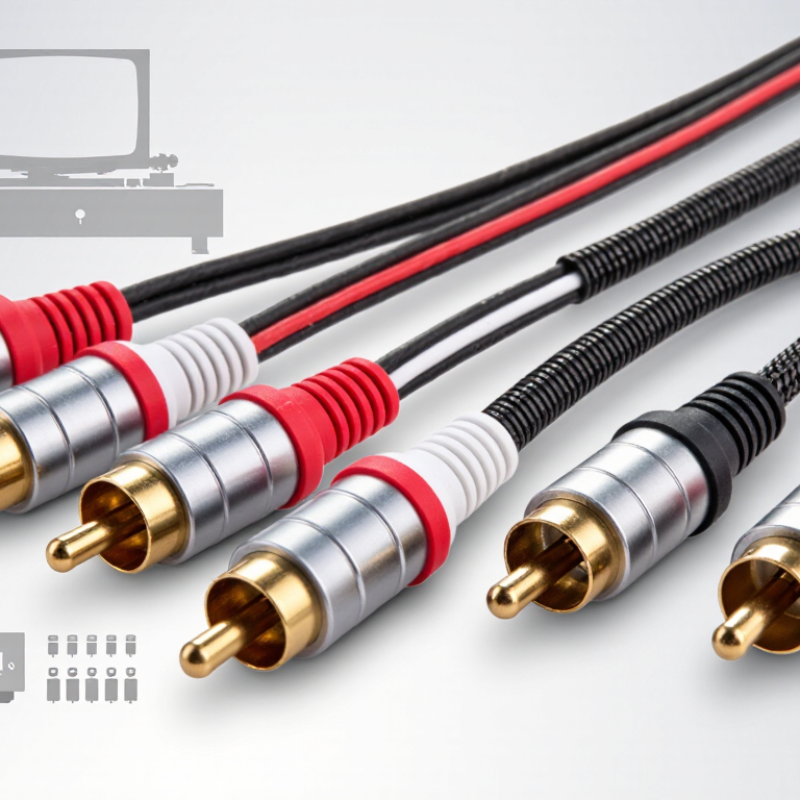
RCA cables remain useful because many amplifiers, televisions, mixers, and older media devices still use analog connections. A 2024 Grand View Research report valued the global consumer electronics market at over US$1 trillion in 2023, supporting continued demand for compatible connection accessories. RCA basics are simple: red and white plugs usually carry stereo audio, while yellow carries composite video. Component RCA sets use three video plugs and can deliver better picture detail.
Buyers should match the cable type to the signal. Stereo RCA suits left and right audio channels. A subwoofer cable carries a low-frequency mono signal. Digital coaxial RCA cables require 75-ohm construction, while analog audio cables need effective shielding and reasonable capacitance. For video, 75-ohm impedance matters greatly. Small mismatches can soften images or create reflections.
Look closely at conductor material, shielding layers, connector grip, and cable length. Short runs reduce clutter and often limit interference. Gold-plated contacts can resist corrosion, but plating alone proves little. A thick jacket may feel reassuring. It does not guarantee clean transmission. MarketsandMarkets reported ongoing growth in the global audio equipment sector, yet specifications still matter more than packaging claims. In practical installations, loose plugs and poor strain relief cause more trouble than modest price differences. No cable is perfect. A buyer may still overestimate exotic materials and underestimate simple fit.
Global buyers should evaluate RCA cables as working components, not decorative accessories. AVIXA’s 2024 Industry Outlook and Trends Analysis forecasts the professional AV market will exceed 400 billion US dollars by 2028. That scale increases demand for consistent, traceable cable performance. Ask suppliers for conductor material, shielding structure, connector plating, capacitance, and batch test records. IEC 60268-3 provides useful measurement principles for audio equipment, although it does not replace cable-specific testing.
A practical test should include hum rejection, channel separation, contact resistance, and repeated bending. Check samples after temperature and humidity exposure, especially when shipments cross climates. A cable may pass a showroom test but fail beside power cables. Procurement teams should request at least three samples from different production batches. Supplier quality systems aligned with ISO 9001 can improve traceability, but certification alone proves little. I would still inspect crimping and strain relief. That detail is often missed.
Tips: Define a test sheet before requesting quotations. Record cable length, connector fit, noise level, and visible defects. Compare total landed cost, not only unit price. Include packaging damage and replacement rates. Ask for a corrective-action report when results vary. Do not accept vague claims such as “premium sound.” Measurable evidence matters more. A small pilot order can reveal inconsistent plating, loose connectors, or excessive stiffness before a full purchase. Mistakes still happen, so leave room for retesting.
How to Evaluate RCA Cables for Global Purchasing
The chart summarizes practical purchasing benchmarks for passive RCA audio cables. Lower values are preferable for resistance, capacitance, bend radius, and signal loss, while higher values are preferable for shielding coverage, conductor size, temperature rating, connector retention, and contact plating. These reference points help buyers compare specifications consistently across international suppliers without relying on brand names.
Choosing among the top 10 RCA cable options depends on performance, installation conditions, and equipment type. A basic stereo cable suits home audio and short connections. A low-capacitance cable preserves detail between a turntable and amplifier. A heavily shielded option helps near power adapters and computer equipment. A dual RCA-to-3.5 mm cable supports phones, laptops, and compact mixers. A subwoofer cable with dense shielding handles long, low-frequency runs. A 75-ohm RCA cable fits composite video and digital coaxial applications. A flexible cable works well behind television cabinets. A rugged, molded cable suits frequent equipment changes. A right-angle connector saves space in crowded panels. A premium low-noise cable serves recording and monitoring systems.
In practical purchasing, connector fit matters as much as conductor material. Tight plugs reduce accidental disconnection, but overly rigid plugs can stress rear-panel sockets. Gold-plated contacts resist surface oxidation. They do not repair poor grounding. For longer runs, choose thicker insulation and effective braided or foil shielding. For short desktop links, excessive cable size may add cost without improving sound. I have seen buyers select expensive cables for problems caused by damaged ports or incorrect settings. That mistake is common. Check the source, destination, length, and nearby interference before comparing prices. A cable’s printed specifications can still mislead when test conditions are unclear. Ask for capacitance, shielding structure, conductor size, and continuity testing. Small details matter.计划群
When comparing ten RCA cables, material should support the application, not merely increase the price. A copper conductor usually provides dependable audio performance and practical flexibility. Silver-plated conductors may improve high-frequency transfer, but the difference is often subtle in ordinary home systems. Low-capacitance designs can preserve detail over longer runs. Short cables usually need less engineering.
Connectors deserve close inspection. A firm metal shell, precise fit, and strong strain relief reduce intermittent noise. Gold plating helps resist oxidation, but it does not automatically improve sound. Nickel-plated contacts can perform well in clean, dry installations.
I check connector pressure by gently moving the plug after connection. Fit matters. Loose plugs are a common failure point.
Shielding separates competent cables from disappointing ones. Braided copper shielding offers flexibility and useful noise rejection, while foil shielding can cover more of the cable surface. Some designs combine both. In studios or near power adapters, that extra protection may be worthwhile.
Signal quality also depends on cable length, equipment output, and grounding. A thick cable is not always quieter. A cable that measured well in my test room once performed poorly beside a noisy power strip. That mistake changed my ranking.
Buyers should compare published capacitance, conductor construction, connector durability, and warranty terms instead of trusting appearance alone. Listen closely. Some differences remain smaller than expected.
Top 10 RCA Cables Which Should Global Buyers Choose?
Global buyers should compare RCA cables by application, not appearance alone. For home audio, double-shielded cables can reduce hum near power adapters. In vehicles, flexible jackets and strong strain relief matter more. I usually check conductor material, plug plating, cable diameter, shielding coverage, and connector fit before requesting prices. Some suppliers describe copper-coated aluminum as “premium.” That wording needs verification.
Standards should guide the shortlist. Ask for documented RoHS and REACH compliance where required by the destination market. Request electrical test records, material declarations, and connector specifications. IEC-related connector requirements may apply, but buyers should confirm the exact product category with a qualified testing body. Requirements differ across regions. Guessing is risky.
Pricing depends on copper content, shielding structure, jacket material, packaging, order volume, and shipping terms. A very low quotation may hide thinner conductors or inconsistent molding. Supplier evaluation should include factory experience, production capacity, sample approval, and lot traceability. During quality control, test continuity, resistance, plug retention, bending, pull strength, and visual defects. Use production samples, not only showroom samples. My own reviews have found occasional color and length variations after approval, so inspection plans should include random checks from every shipment. Perfect control is unlikely. Consistent records are more realistic.
| Rank | Recommended Cable Type | Typical Application | Core & Shield Construction | Nominal Impedance | Connector / Jacket Specification | Applicable Standards & Documents | Indicative FOB Price USD / 1 m (500 pcs) |
Recommended Supplier Type | Key Quality-Control Checks | Buyer Suitability |
|---|---|---|---|---|---|---|---|---|---|---|
| 1 | Premium 75 Ω Stereo RCA Pair | Hi-fi line-level audio, DACs, amplifiers, and home audio equipment | Oxygen-free copper or high-purity copper conductors; twisted signal pair; dense braided or foil-plus-braid shielding | 75 Ω nominal for video-compatible geometry; audio performance depends mainly on shielding and termination | Gold-flashed or nickel-plated contacts; molded strain relief; flexible PVC or low-smoke halogen-free jacket | IEC 60130-9 connector interface where applicable; RoHS and REACH material declarations; supplier test report | $2.80–$6.50 | Audio-cable specialist with automated crimping and 100% continuity testing | Conductor resistance, shield coverage, contact resistance, continuity, polarity, pull force, and plug insertion/withdrawal force | Best overall |
| 2 | 75 Ω Composite Video RCA Cable | CVBS composite video, surveillance monitors, DVD players, and legacy AV equipment | Single coaxial structure with solid or stranded copper center conductor, dielectric insulation, and high-coverage shield | 75 Ω nominal | Nickel-plated RCA plugs; controlled cable geometry; PVC jacket with clear meter marking preferred | 75 Ω video design practice; IEC 60130-9 connector interface where applicable; RoHS/REACH documentation | $1.20–$3.20 | Video-cable manufacturer with impedance and attenuation test capability | Characteristic impedance, insertion loss, return loss, attenuation, shield effectiveness, continuity, and color coding | Best for video |
| 3 | Shielded Stereo RCA Interconnect | General consumer audio, mixers, receivers, powered speakers, and media players | Two individually insulated copper conductors with overall foil or braided shield; drain wire optional | Not normally specified for line-level audio; low capacitance is preferred | Nickel-plated contacts; soft PVC jacket; molded connector housing | IEC 60130-9 connector interface where applicable; RoHS and REACH declarations; basic electrical safety documentation | $0.90–$2.40 | High-volume AV cable assembler using standardized connector tooling | Channel identification, left/right polarity, conductor resistance, insulation resistance, shield continuity, and flex testing | Best value |
| 4 | Flexible OFC RCA Cable | Portable audio racks, installation work, repeated connection and disconnection | Fine-strand copper conductors with high-flex insulation and braided or spiral copper shield | Audio-oriented; nominal impedance usually not declared | Flexible TPE or PVC jacket; reinforced boot; nickel-plated or gold-flashed contact surfaces | RoHS/REACH material compliance; IEC 60130-9 connector interface where applicable; supplier reliability report | $1.50–$4.20 | Flexible-cable supplier with cable-flex and connector-strain testing | Flex-cycle endurance, conductor breakage, jacket abrasion, strain relief, contact resistance, and solder/crimp integrity | Best for mobility |
| 5 | Low-Capacitance Stereo RCA Cable | Longer analog audio runs, recording interfaces, preamplifiers, and studio equipment | Low-capacitance twisted conductors with dense braided shield; copper or tinned-copper drain arrangement | Audio cable; capacitance is the critical electrical parameter | Metal-shell or reinforced molded RCA connectors; flexible low-noise jacket | RoHS/REACH declarations; IEC 60130-9 connector interface where applicable; documented capacitance data | $2.20–$5.80 | Professional audio-cable supplier with capacitance and noise-screening capability | Capacitance per meter, noise pickup, shield resistance, channel isolation, polarity, and connector retention | Best for long audio runs |
| 6 | Heavy-Duty PVC RCA Cable | Retail accessories, vehicle audio, workshops, and general-purpose replacement kits | Stranded copper conductors; double insulation; overall braided or foil shield | Audio-oriented; impedance commonly omitted | Thicker PVC jacket; molded strain relief; nickel-plated contacts | RoHS/REACH documentation; applicable local flammability and material declarations; IEC 60130-9 interface where applicable | $1.10–$3.00 | Mass-production cable factory with injection molding and in-line electrical testers | Jacket thickness, tensile strength, plug pull force, continuity, short-circuit screening, and packaging inspection | Best for retail volume |
| 7 | Right-Angle RCA Cable | Space-limited audio systems, car stereo installations, and compact equipment cabinets | Shielded copper conductors with angled connector housing designed to reduce bend radius at the equipment panel | Audio-oriented; impedance generally not specified | 90-degree molded or metal-shell connector; flexible jacket; reinforced exit point | RoHS/REACH declarations; IEC 60130-9 connector interface where applicable; mechanical drawing required for fit verification | $1.40–$3.80 | Custom cable assembler capable of angle-specific tooling and fixture testing | Connector angle and dimensions, strain relief, bend radius, insertion force, continuity, and housing crack inspection | Best for tight spaces |
| 8 | RCA to 3.5 mm Adapter Cable | Connecting phones, laptops, portable players, mixers, and powered speakers to RCA inputs | Two-channel shielded audio conductors; separate common return; flexible PVC or TPE jacket | Audio-oriented; impedance generally not specified | RCA plugs on one end and 3.5 mm TRS plug on the other; nickel-plated contacts are common | RoHS/REACH declarations; applicable connector dimensional drawings; IEC 60130-9 may apply to RCA interface | $0.80–$2.50 | Consumer-electronics accessory supplier with multi-connector assembly capability | Tip/ring/sleeve mapping, left/right polarity, channel separation, plug retention, continuity, and intermittent-contact testing | Best for compatibility |
| 9 | RCA Y-Splitter Cable | Signal distribution, subwoofer connections, stereo-to-mono applications, and test benches | Shielded copper conductors with either one-to-two or two-to-one wiring topology; molded branch junction | Audio-oriented; impedance generally not specified | Nickel-plated RCA connectors; reinforced Y-junction; polarity and wiring diagram required | RoHS/REACH declarations; IEC 60130-9 interface where applicable; wiring schematic and inspection record | $0.90–$2.80 | AV accessory supplier with automated wiring fixtures and 100% pin-mapping tests | Pin mapping, polarity, branch-junction strain, shield continuity, short-circuit testing, and connector retention | Best for signal routing |
| 10 | Halogen-Free RCA Cable | Commercial installations, transportation projects, public buildings, and buyers with restricted-material policies | Copper conductors with foil or braided shield; low-smoke halogen-free thermoplastic jacket | Audio-oriented unless manufactured as a 75 Ω coaxial video version | Low-smoke halogen-free jacket; connector plating and housing material specified by purchase order | RoHS/REACH declarations; supplier material composition file; applicable low-smoke and halogen-free test reports required by destination market | $2.80–$7.50 | Compliance-focused cable manufacturer with traceable compound and batch documentation | Material verification, smoke/halogen test documentation, insulation resistance, flame behavior where required, continuity, and batch traceability | Best for compliance |