
What Are the Top 10 Types of Fiber Optic Cable Connectors?
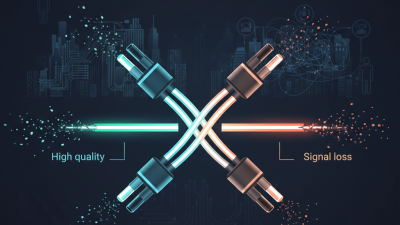
Choosing the right fiber optic cable connectors can determine whether a network performs smoothly or struggles with unexplained signal loss. A connector may look small, yet its polish, alignment, ferrule quality, and locking method affect every transmitted bit. In a crowded data center, one careless end face can create reflections, attenuation, and hours of troubleshooting.
Jim Hayes, a respected fiber-optics educator and president of the Fiber Optics Association, offers a useful reminder: “Fiber optics is a craft, not just a technology.” That observation matters when comparing the top 10 types of fiber optic cable connectors. Connector selection is not merely a catalog decision. It depends on fiber type, polarity, insertion space, installation conditions, cleaning practices, and future upgrades.
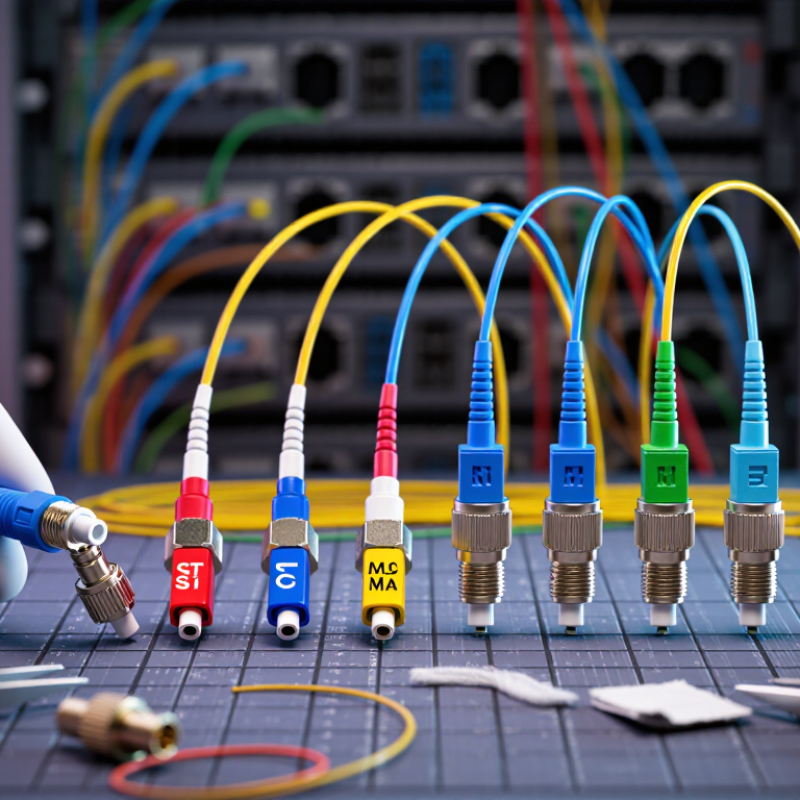
This guide examines LC, SC, ST, FC, MPO/MTP, MU, E2000, MT-RJ, SMA, and newer high-density options such as CS or SN connectors. Each design has a distinct purpose. LC connectors suit dense server racks. SC connectors remain practical for straightforward installations. FC connectors still serve demanding environments requiring secure alignment. MPO/MTP assemblies simplify parallel-fiber connections, but polarity mistakes can become costly.
Small details matter.
The comparison will consider structure, performance, advantages, limitations, and common applications. It will also question a familiar assumption: the newest connector is not always the best connector. Real projects involve dust, tight bends, rushed technicians, aging equipment, and imperfect documentation. Those realities deserve attention before any connector enters the cabinet.
What Are Fiber Optic Cable Connectors and How Do They Work?
What Are the Top 10 Types of Fiber Optic Cable Connectors?
What Are Fiber Optic Cable Connectors and How Do They Work?
Fiber optic connectors join cables with precise alignment. They guide light through polished glass ends, called ferrules. An alignment sleeve keeps the cores centered. Even a tiny offset can increase insertion loss. The FOA notes that typical single-mode connections often target below 0.5 dB loss. Small details matter.
The main connector families include LC, SC, ST, FC, MPO, MT-RJ, MU, E2000, DIN, and SMA. Each suits different conditions. LC saves rack space, while SC offers a larger push-pull body. FC uses a threaded coupling and handles vibration well. MPO connects multiple fibers at once. Its endface needs careful cleaning. Dust is unforgiving.
During installation, technicians inspect, clean, and inspect again. A microscope reveals scratches that the eye may miss. UPC polishing reduces reflection, while APC polishing angles the endface. The difference matters in high-speed and long-distance links. ITU Facts and Figures 2024 reports that 5.5 billion people use the Internet, increasing pressure on optical infrastructure. FTTH Council Europe’s 2024 market data also shows continued expansion of fiber access across European markets. Those numbers describe demand, not connector quality. I have seen neat cabinets fail because one connector was contaminated. Perfect alignment is never guaranteed. It must be verified.
| Rank | Connector Type | Ferrule or Alignment Structure | Connection Mechanism | Fiber Capacity | Common Fiber Support | Typical Performance | Common Applications | Key Advantages and Limitations |
|---|---|---|---|---|---|---|---|---|
| 1 | LC | 1.25 mm ceramic ferrule | Latch-style push-pull coupling | Simplex or duplex | Single-mode and multimode | Typical insertion loss: ≤0.30 dB; UPC and APC versions are available | High-density patch panels, data centers, telecommunications equipment, and transceivers | Compact and space-efficient. The small latch can be less convenient to operate in crowded panels. |
| 2 | SC | 2.5 mm ceramic or polymer ferrule | Push-pull coupling with a square housing | Simplex or duplex | Single-mode and multimode | Typical insertion loss: ≤0.30 dB; UPC and APC versions are common | Telecommunications, fiber-to-the-home networks, patch panels, and test equipment | Easy to install and robust. It occupies more panel space than LC connectors. |
| 3 | ST | 2.5 mm ceramic or polymer ferrule | Bayonet-style twist-lock coupling | Simplex | Multimode and some single-mode installations | Typical insertion loss: ≤0.50 dB; usually supplied with UPC-style polishing | Legacy enterprise networks, industrial links, premises cabling, and laboratory systems | Reliable twist-lock retention. Its larger body and legacy design make it less common in new high-density installations. |
| 4 | FC | 2.5 mm ceramic ferrule with a keyed alignment system | Threaded screw coupling | Simplex | Primarily single-mode; also used with multimode | Typical insertion loss: ≤0.30 dB; UPC and APC versions are available | Precision measurement equipment, test systems, outside-plant telecommunications, and vibration-prone environments | Strong mechanical retention and good alignment stability. Installation is slower than push-pull connector types. |
| 5 | MPO | Multi-fiber MT ferrule with guide pins | Push-pull coupling with keyed polarity control | Commonly 8, 12, 16, or 24 fibers | Single-mode and multimode parallel-fiber systems | Typical insertion loss is commonly specified at ≤0.35 dB per mated connection, depending on grade and fiber count | Data-center trunks, parallel optics, high-speed Ethernet, and pre-terminated modular cabling | Very high density and fast deployment. End-face cleanliness, polarity, keying, and gender must be managed carefully. |
| 6 | MU | 1.25 mm ceramic ferrule | Compact push-pull coupling with a latch | Simplex or duplex | Single-mode and multimode | Typical insertion loss: approximately ≤0.30 dB; UPC and APC configurations may be used | Compact optical modules, telecommunications equipment, and high-density interconnects | Smaller than SC and suitable for dense packaging. It is less widely deployed than LC in many current networks. |
| 7 | MT-RJ | Two-fiber MT ferrule with precision guide pins | Compact push-pull coupling | Duplex, typically two fibers | Primarily multimode; some single-mode versions exist | Typical insertion loss: approximately ≤0.70 dB, depending on design and alignment quality | Legacy duplex LAN systems, compact equipment, and space-constrained installations | Combines two fibers in one small connector. Polarity, gender, and cleaning are more critical than with many single-fiber connectors. |
| 8 | SMA 905 | 3.175 mm metal or ceramic ferrule | Threaded screw coupling | Simplex | Multimode and specialty fibers | Performance varies considerably because the connector is not generally designed for physical-contact telecommunications polishing | Industrial sensing, spectroscopy, medical equipment, illumination systems, and specialty optical links | Strong and suitable for specialty applications. It has relatively low alignment precision for modern high-performance telecom links. |
| 9 | FDDI | 2.5 mm ferrule-based duplex design | Duplex keyed push-pull coupling | Duplex, typically two fibers | Primarily multimode | Typical insertion loss: approximately ≤0.50 dB, depending on the connector and cable assembly | Legacy 100 Mb/s Fiber Distributed Data Interface networks and older campus backbones | Provides keyed duplex connection and good handling. It is largely a legacy format and is uncommon in new installations. |
| 10 | D4 | Approximately 2.0 mm ceramic ferrule | Threaded screw coupling with keyed alignment | Simplex | Primarily single-mode | Typical insertion loss: approximately ≤0.50 dB, depending on assembly quality and polishing | Legacy telecommunications transmission systems, test equipment, and specialized network installations | Provides secure threaded retention in a compact form. It has been largely superseded by newer connector designs. |
Related Posts
-

How to Choose Fiber Optic Cable Connectors
-
What Are the Top Fiber Connectors for Global Buyers?
-

Best Fiber Optic Adapter Options for Global Buyers 2026?
-
Harnessing Fiber Optic Adapter Innovations at China Import and Export Fair 2025
-
2026 Best Fiber Optic Cable Assemblies for High Performance Networking?
-
Why Are Fiber Connectors Essential for Network Performance?