How to Choose the Best Pool Cleaning Accessories?
Choosing Pool Cleaning Accessories is less about buying the biggest kit and more about matching tools to your pool. A leaf net can lift floating debris quickly, while a fine-mesh skimmer catches smaller particles. A wall brush helps loosen algae and dirt before they settle. Small details matter. A pole that locks securely and reaches the pool’s corners can make routine work easier. Yet a brush that suits concrete may be too abrasive for a vinyl liner. Even experienced owners can overlook that difference. It is worth checking before a tool touches the water.
Start by identifying your pool surface, shape, and most common debris. Vinyl liners, tile, and fiberglass each call for suitable brush materials and care. Check product labels and your pool or equipment manufacturer’s guidance, especially when choosing a vacuum head, hose, or replacement part. A mismatch may reduce cleaning performance or damage a surface. Also consider storage: wet brushes and tangled hoses left in the sun can wear sooner. Price matters, but a low-cost accessory is not a bargain if it breaks after a few uses. No single setup works for every pool. This guide will help you compare practical options, understand what each tool does, and build a kit around your actual cleaning routine—not an idealized one.
Assess Your Pool’s Size, Surface, and Cleaning Needs
Before choosing pool cleaning accessories, measure the pool’s length, width, and depth. A small above-ground pool may need only a telescoping pole, a leaf net, and a suitable vacuum head. Larger pools usually benefit from longer-reach tools and hoses that can cover the floor without constant repositioning. Check the pole’s reach against the deepest point. A tool that falls short is frustrating.
Match each brush and vacuum head to the pool surface. Vinyl liners can be scratched by stiff bristles, so choose a softer brush and check that the vacuum head has smooth edges. Concrete surfaces tolerate firmer brushing, especially where algae gathers along steps and waterlines. Fiberglass needs gentler contact. Read the pool or accessory instructions when available; surface finishes differ, and guessing can be costly.
Think about what actually lands in the water. Trees nearby? A fine-mesh skimmer net can catch small debris, while a larger net moves leaves faster. Sand or grit may call for a vacuum designed to collect fine particles. For stairs, corners, and narrow ledges, look for attachments that can reach tight spaces. I have found that a “universal” accessory can still fit awkwardly. Check connection sizes and hose compatibility before buying, and consider how often you clean. Daily leaf removal calls for quick, easy-to-rinse tools; occasional deep cleaning may need more specialized attachments.
Identify the Main Types of Pool Cleaning Accessories
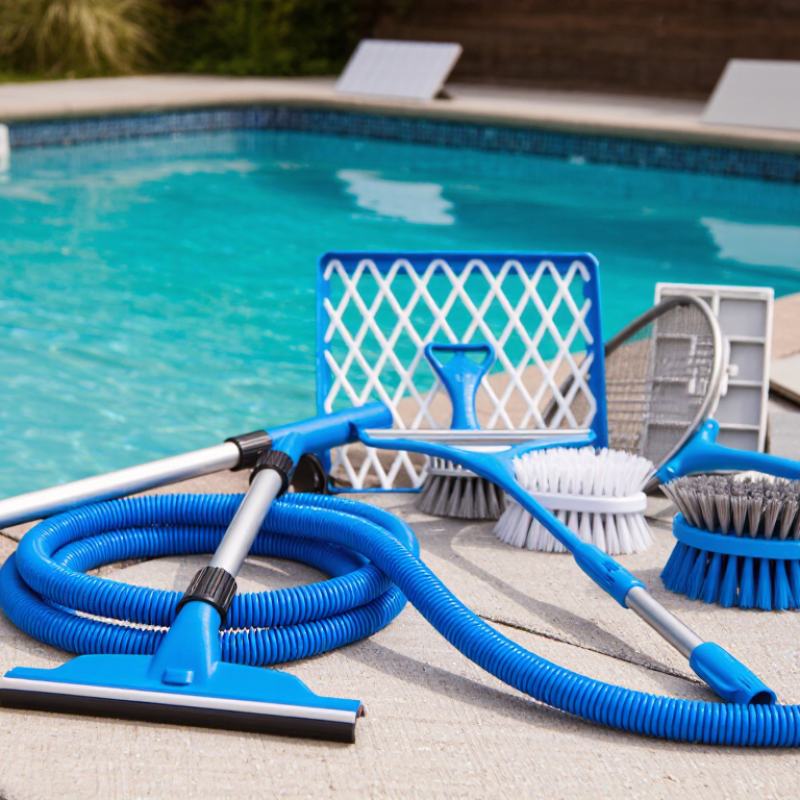
Pool cleaning accessories usually fall into a few practical groups. Leaf skimmers have flat nets for floating leaves and finer mesh for small debris. A deep bag net can collect heavier material from the pool floor, though it may feel awkward when full. Small but useful. Telescoping poles connect many nets, brushes, and manual vacuum heads, so check that the fittings match before buying.
Brushes loosen algae and dirt from walls, steps, and corners. Nylon bristles suit many pool surfaces, while harder bristles may damage delicate finishes; check the pool manufacturer’s care guidance. Manual vacuum heads use a hose and pole to collect settled debris. Suction and pressure cleaners move around the pool with the system, while robotic cleaners operate independently. Each type has trade-offs, including setup time and how well it reaches steps or tight corners.
Water-testing kits and test strips help track sanitizer and pH levels; follow their instructions and keep them dry. A leaf basket can catch larger debris before it reaches the pump, but it does not replace skimming. Choose accessories for the pool’s surface, size, and common debris. There is no perfect kit. I’d start with a pole, a suitable net, and a surface-safe brush, then notice what the routine still misses.
How to read this chart: “Yes” indicates an accessory commonly supports that task; “No” means it is not typically used for it. A robotic cleaner’s capabilities vary by model.
Check Compatibility, Durability, and Ease of Use
Choose pool cleaning accessories by checking compatibility before appearance. Match the pole diameter, hose coupling, and cleaner type to your setup; connections should fit without force. Brush bristles designed for concrete may scratch a softer liner, so check the manufacturer’s surface guidance. NSF/ANSI 50 sets requirements for many pool and spa circulation components. Where relevant, certification can help assess performance, though it cannot guarantee a perfect fit for every pool.
Durability depends on materials and construction. Look for corrosion-resistant parts, UV-resistant plastics, secure joints, and surfaces that rinse clean. The CDC’s 2018 MMWR review recorded 493 treated-recreational-water outbreaks and 27,219 illnesses from 2000 to 2014. These figures do not show that accessory choice caused illness, but they underline the value of consistent cleaning and water testing. Ease matters, too. Can you detach, rinse, and store the tool quickly? Handles that lock firmly and lightweight heads can make steps and corners easier to reach. A sturdy tool may feel cumbersome; a lighter one may wear sooner. Recheck joints after a season. One inspection is not always enough.
Compare Safety Features, Maintenance Needs, and Cost
When comparing pool cleaning accessories, check safety before price. A telescopic pole should lock firmly and show no cracks near its joints. Choose nets and brushes with smooth edges; loose plastic can scratch a pool surface or snag skin. For powered cleaners, inspect cable condition and follow the product’s electrical safety instructions. Keep plugs and connections away from standing water. Small details matter.
Maintenance affects how useful an accessory remains. Rinse nets, brush heads, and vacuum parts with fresh water after use, especially when pool chemicals have left residue. Let them dry before storage to limit mildew and corrosion. Check bristles, hose connections, and pole collars regularly. A quick inspection takes little time. Still, I sometimes underestimate how quickly grit collects in joints, so cleaning them deserves more attention than it gets.
Cost is more than the price on the shelf. A low-cost vacuum head may need frequent replacement, while a pricier one may fit several standard poles or use replaceable parts. Check dimensions and connection types before buying; “universal” does not always mean compatible. Compare likely upkeep with the initial cost, and consider how often you clean. A household that removes leaves daily may value a sturdy net more than extra features. The cheapest option can be sensible, but only if it handles your pool’s surfaces without creating a safety or maintenance headache.
Choose Accessories That Match Your Cleaning Routine
A useful pool-cleaning kit starts with your routine, not a long shopping list. If leaves collect near the steps each morning, a sturdy leaf net may save more time than a powered vacuum. For walls and waterlines, choose a brush suited to your pool’s surface; a brush that is too stiff can cause wear. Check the pool and accessory instructions before use.
Match tools to the work you actually do. A telescoping pole can support a skimmer, brush, or manual vacuum, so check that their fittings are compatible. If you vacuum weekly, look for a head that moves easily across your pool floor and connects to your setup. A simple water-testing kit also helps you spot changes that cleaning alone cannot fix. Small details matter.
Storage matters, too. Wet nets and brushes left in a sunny corner can wear faster, so rinse them and let them dry out of direct sun when practical. I’ve found it easy to buy tools for an ideal routine, then use only two. Be honest about the time you have. Choose accessories you can handle comfortably, and replace worn or cracked parts rather than forcing them to work.