Choosing the right telephone wire in 2026 requires more than comparing prices or conductor counts. Global buyers must consider installation conditions, signal performance, insulation quality, and long-term maintenance. A cable used inside a quiet office may fail in a humid warehouse or outdoor cabinet.
This guide examines common telephone wire types for residential, commercial, industrial, and communication projects. It considers twisted-pair designs, flat telephone cords, shielded cables, outdoor-rated options, and low-smoke materials. Each type serves a different purpose. Copper conductors often provide dependable connectivity and easy termination. However, conductor size, pair arrangement, insulation thickness, and resistance can change real-world results.
Small details matter.
A buyer should check voltage ratings, temperature ranges, flame performance, connector compatibility, and packaging quality. Local electrical and building requirements also deserve careful review before purchasing. Certified testing can offer stronger assurance than attractive product photographs or vague marketplace descriptions.
Experience from installation projects shows that the cheapest cable is not always the most economical choice. Weak insulation can crack during pulling. Poor twisting can increase interference. I have also seen specifications that looked complete but omitted essential test data. That deserves caution.
The best selection depends on the environment, network design, expected service life, and available technical support. This article provides a practical comparison for international buyers, while recognizing that product quality can vary between suppliers. Verify samples, request documentation, and test compatibility before placing a large order.
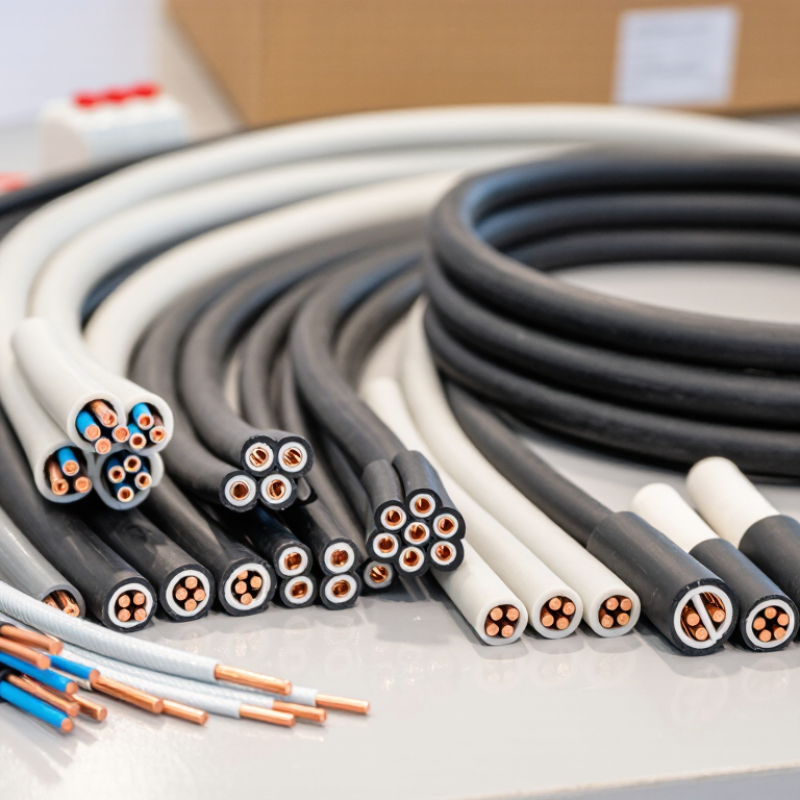
Copper remains the safer choice for telephone and low-voltage communication installations. Solid copper carries signals with lower resistance and better mechanical stability. For a 100-meter link, the commonly cited ANSI/TIA-568.2-D benchmark is 9.38 Ω at 20°C. This figure helps buyers compare conductor quality, not just cable prices. Lower resistance usually means less voltage loss and more predictable performance.
CCA, or copper-clad aluminum, uses an aluminum core with a thin copper layer. It is lighter and often cheaper, but its resistance is higher than solid copper. Long runs may show greater signal loss, especially in warm conduits or crowded cabinets. CCA can also become less reliable after repeated bending or termination. It may look similar during inspection. That assumption can fail.
Ask suppliers for conductor material, resistance test results, conductor diameter, and temperature conditions. A 9.38 Ω/100 m result should include a clear test method and measurement temperature. Check whether the cable is intended for voice service, data cabling, or another low-voltage use. Small terminals can expose weak conductors quickly. Poor contact creates heat and intermittent faults. Copper is not always necessary for a short indoor run, but savings should be measured against replacement labor, downtime, and inspection risk. Socially responsible purchasing also means avoiding vague specifications and unverifiable compliance claims.
For global buyers, the best telephone wire depends on required bandwidth, distance, and installation conditions. Cat 3 supports frequencies up to 16 MHz. It suits voice services, alarms, and basic low-speed communication. Cat 5e reaches 100 MHz and handles most office voice and data systems. Cat 6 extends performance to 250 MHz. It offers stronger noise control for demanding networks.
That choice matters. In practical installations, Cat 5e often provides a sensible balance between cost and performance. Cat 6 is more suitable near motors, lighting circuits, or crowded cable pathways. Its larger conductors can make termination less flexible. Cat 3 remains useful for simple telephone extensions, but it limits future upgrades. Do not guess. Check the actual equipment and planned bandwidth.
ANSI/TIA ratings describe tested transmission performance, not guaranteed results in every building. Cable length, bend radius, connector quality, grounding, and separation from power cables can change results. A standard channel commonly includes up to 90 meters of permanent cabling and patch connections within a 100-meter channel. Field testing is wise, especially for international projects. Local electrical rules may also differ from ANSI/TIA practices. One overlooked detail is conductor material; low-quality substitutes can weaken reliability, even when the printed category looks correct.
Cat 3, Cat 5e, and Cat 6: ANSI/TIA Rated Performance from 16–250 MHz
The chart compares the standardized maximum frequency ratings commonly associated with balanced twisted-pair categories: Cat 3 at 16 MHz, Cat 5e at 100 MHz, and Cat 6 at 250 MHz. Higher frequency capability can support greater transmission performance, but actual results also depend on installation quality, channel length, connectors, and network equipment.
For global buyers, telephone wire selection should begin with the voice band, not appearance. Standard speech transmission commonly covers 300–3,400 Hz under ITU-T telephone-channel guidance. Both flat satin and twisted pair can carry this range when distances remain modest.
Flat satin cable is flexible and easy to route behind desks or along handset bases. Its parallel conductors, however, provide less protection from electromagnetic interference. In a quiet office, that may be acceptable. Near power adapters, motors, or fluorescent lighting, users may notice hum or faint crackling. I have seen this cable perform well for short handset connections, but poorly across busy equipment rooms.
Twisted pair is usually the safer choice for longer or noisier runs. Its balanced conductors reduce induced interference and crosstalk. Correct termination matters just as much as the cable type. Loose contacts can create intermittent speech, even with excellent wire. Buyers should check conductor size, insulation quality, plug compatibility, and the installation environment. A simple continuity test helps, but it cannot reveal every noise problem. That limitation is easy to miss. I once blamed the cable too quickly; the actual fault was a damaged wall socket. For international sourcing, request clear electrical specifications and sample testing before ordering large quantities.
Indoor, outdoor, and aerial telephone cables face different stresses. Indoor wire usually needs flexible insulation, low smoke performance, and controlled flame spread. IEC 60332 testing helps evaluate whether flame travels along the cable. However, buyers should check the exact test part. IEC 60332-1 and IEC 60332-3 address different cable arrangements.
Keep the jacket visible.
Outdoor cable needs stronger moisture resistance and reliable UV protection. Sunlight can make an unprotected jacket brittle, especially on rooftops and open walls. Look for documented UV-aging data, not only the word “outdoor.” A thicker sheath can help, but thickness alone does not prove durability. Temperature cycling, rain, and installation tension also affect service life.
Aerial cable requires more than a weather-resistant jacket. It may need a messenger wire, suitable tensile strength, and controlled sag between supports. The design should tolerate wind movement without crushing the conductors. During field checks, I would inspect sealing, bend radius, and support spacing. Small installation errors often create larger failures than the cable itself.
IEC 60332 performance is valuable, but it does not replace local installation requirements. Fire behavior, UV resistance, mechanical strength, and conductor size should be reviewed together. A cable can meet one test and still be unsuitable for a harsh route. That is an easy detail to overlook.
For global buyers, telephone wire selection now depends on compliance as much as conductor size. RoHS documentation should confirm restricted substance limits in the complete cable, including insulation and plastic packaging. Ask for a current declaration, not an old template.
REACH checks chemical obligations and possible substances of very high concern. Request the latest substance statement and supplier traceability.
UL requirements may involve flame performance, insulation construction, and recognized testing for the intended market. A certificate alone is insufficient. Check its scope, cable type, and production location.
IEC 61156 is relevant when the wire supports structured digital communication. Confirm the correct category, impedance, transmission performance, and test method. Do not assume every twisted pair qualifies.
Inspect samples physically. Look for consistent twisting, clear jacket markings, clean copper, and stable insulation thickness. A simple bend test can reveal brittle materials, though it cannot replace laboratory testing. Keep batch numbers, technical drawings, and inspection photos together. This creates useful evidence during customs reviews or quality disputes.
Be careful with supplier claims. A compliant report may describe an earlier formulation. Material changes can pass unnoticed between shipments. Ask whether the tested sample matches the current production batch. Destination rules also differ, and telephone wire for indoor buildings may face different fire requirements than outdoor cable. In practice, buyers sometimes focus on RoHS and overlook mechanical performance. That is a costly gap. Supplier reliability is proven through consistent records, not attractive wording.